
Evacuation
Emergency Go-Bag Checklist: What to Pack Before You Need to Evacuate
Build a practical emergency go-bag for people, pets, medication, documents, mobility needs, food, water, power, and evacuation.
Save to Pinterest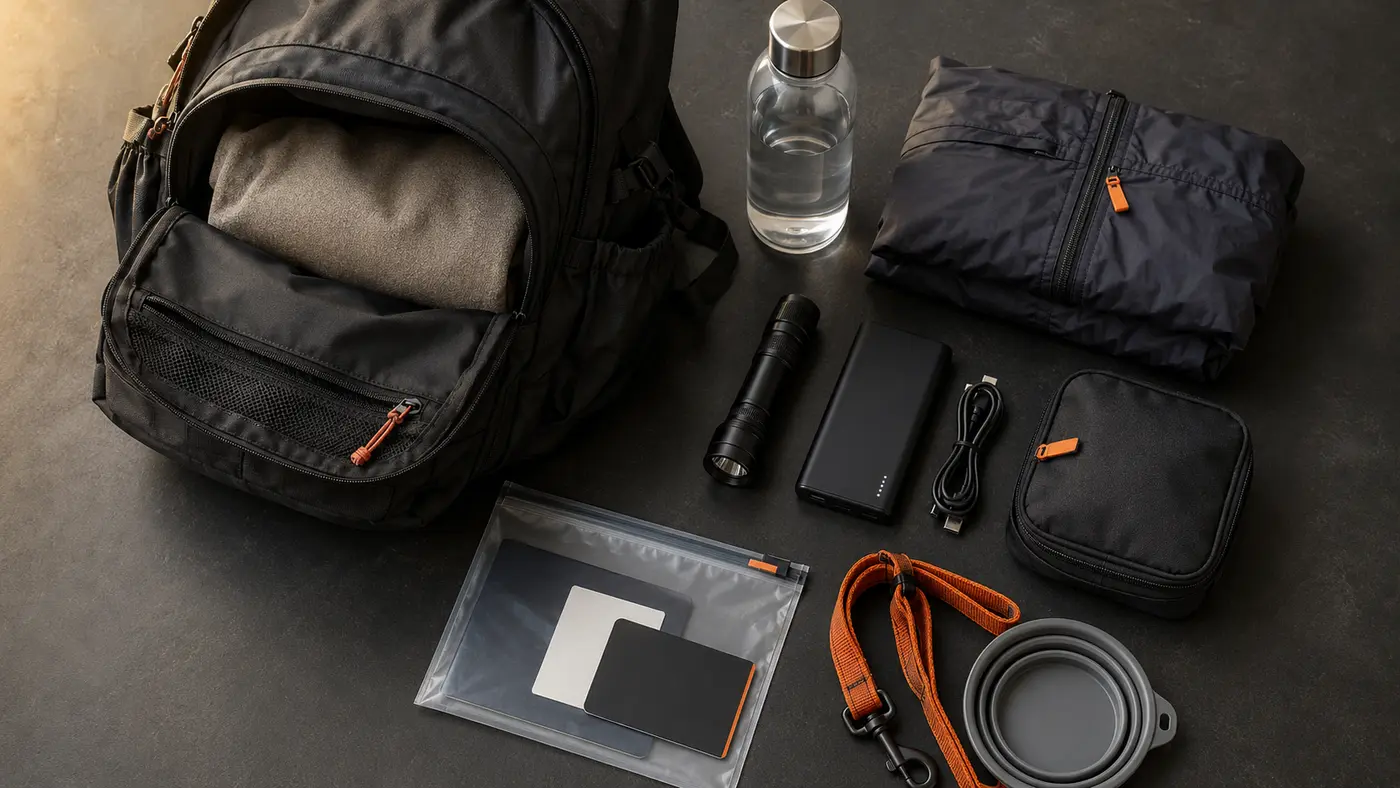
A go-bag is not a survival fantasy or an excuse to buy a pile of tactical gear. It is a portable set of essentials that helps you leave home safely, reach your destination, and manage the first stretch of an evacuation without trying to remember everything under pressure.

Written by Coach Dex
Practical guidance, checked against primary sources
Coach Dex is the founder and author behind SWC. Safety-sensitive guidance is checked against current government, public-safety, utility, or manufacturer information before publication.
Decide what your go-bag must do
Start with the most likely reasons your household might need to leave: a house fire, gas leak, flood, hurricane, wildfire, extended outage, or another local emergency. Then name two realistic destinations, such as a relative’s home, an accessible hotel, or a public shelter.
Ready.gov distinguishes a portable go-bag from the larger supplies you may carry in a vehicle. Your evacuation bag should be something you can safely carry if you have to walk, use public transportation, or move through a crowded shelter. Keep heavier backup water, food, bedding, and vehicle tools in a separate car or home kit.
- Choose a primary and alternate destination before buying gear
- Plan for leaving on foot, by public transportation, or by vehicle
- Follow evacuation orders, official routes, and local emergency instructions
- Build around the people and animals in your household—not a generic online list
Pack identification, contacts, and your plan first
The documents and information that help you prove identity, obtain medication, contact family, and reach a safe destination often matter more than specialty equipment. Carry only the copies you need and protect sensitive information from loss or theft.
- Government-issued identification and insurance information
- A printed household contact card and out-of-area contact
- Medication list, allergies, medical conditions, and provider numbers
- Copies of essential records in a waterproof envelope
- A small amount of cash in mixed denominations, stored discreetly
- Paper directions to your destinations and two evacuation routes
Make medication and health needs non-negotiable
List prescription medicines, over-the-counter essentials, medical supplies, and powered equipment that would be difficult to replace quickly. Keep medicines in their labeled containers when possible, watch expiration dates, and follow the storage instructions from your pharmacist, health professional, equipment supplier, or manufacturer.
If someone depends on mobility equipment, oxygen, a ventilator, refrigerated medicine, or another powered device, the bag is only one part of the plan. Arrange accessible transportation, backup power or charging recommended by the equipment supplier, and more than one safe destination before an emergency.
- Current medicines and written dosing instructions
- Copies of prescriptions and pharmacy contact information
- Glasses, hearing-aid supplies, mobility aids, and communication cards
- A written equipment summary with model, supplier, and emergency numbers
- Comfort and sensory items that make an unfamiliar setting easier to manage
Add communication, light, and portable power
A phone is useful only if you can charge it and receive trusted information. Enable official alerts now, keep a written contact card in the bag, and add simple backup tools that every household member knows how to use.
- Phone charging cable and a charged power bank
- Compact flashlight or headlamp with the correct batteries
- Battery-powered or hand-crank radio if it fits your plan
- Whistle and a permanent marker
- Printed local emergency-management and utility numbers
Pack portable water, familiar food, clothing, and hygiene
Your go-bag should contain a manageable amount of drinking water and food that is familiar, shelf-stable, and easy to eat without cooking. It does not need to hold your entire home water supply. Add a separate vehicle module when you can safely transport more.
- Sealed drinking water in containers you can carry
- Familiar shelf-stable snacks that meet dietary and allergy needs
- A weather layer, change of underclothes and socks, and sturdy footwear
- Hand sanitizer, wipes, toilet paper, menstrual products, and spare masks
- Small first-aid supplies and any personal care items you use every day
- Infant feeding, diapering, and comfort supplies when needed
Give pets and service animals their own module
A pet plan starts with transport and a safe destination. The CDC recommends preparing records, food, water, medication, identification, leashes or harnesses, carriers, cleaning supplies, and familiar bedding or comfort items. Ask your veterinarian about your animal’s specific needs.
- Secure leash, harness, carrier, and current ID tag
- Food, water, collapsible bowls, and feeding instructions
- Medication and copies of veterinary and vaccination records
- Recent photo, microchip information, and proof of ownership
- Waste bags, litter supplies, cleaning items, and a comfort item
Keep the bag affordable and carryable
Use a backpack, duffel, rolling bag, or mobility-device pouch you already own. Reuse zipper bags for organized modules, add copies instead of original documents when appropriate, and build one category at a time. Reliability and familiarity matter more than matching gear.
- Pack the most critical items close to the top
- Label medication, pet, child, and document modules
- Avoid tools you have never practiced using
- Do not overload one person with the whole household’s supplies
- Try carrying the finished bag for ten minutes and remove what is not essential
Store it safely, then review it on a schedule
Keep the go-bag near a safe exit where household members can reach it, but protect medication, cash, and personal records from children, heat, moisture, and theft. Place keys, sturdy shoes, pet carriers, and mobility equipment where they support the same exit plan.
Review the bag at least twice a year and whenever medications, health needs, caregivers, pets, phone numbers, destinations, seasons, or clothing sizes change. Recharge the power bank, test lights, replace expired items, and practice leaving with the bag.
- Set two calendar reminders each year
- Add a tag showing the last review date
- Check every household member’s ability to move the bag safely
- Practice one calm evacuation drill using an alternate route
Common questions
Evacuation FAQ
What is the difference between a go-bag and a home emergency kit?
A go-bag is a portable set of essentials for leaving quickly. A home emergency kit supports sheltering at home and can hold more water, food, sanitation supplies, and equipment. A vehicle evacuation kit can carry additional supplies that would make a walking bag too heavy.
How heavy should an emergency go-bag be?
There is no safe universal weight for every person. The bag should be light enough for its user to carry or move safely with their transportation and mobility needs. Test the finished bag for ten minutes and split shared supplies across household members or a rolling bag when appropriate.
Should every family member have a separate go-bag?
Separate bags can reduce the chance that one person carries everything, but the plan should match age, strength, health, and mobility. Children may carry only a light comfort-and-contact pouch, while adults share water, documents, medication modules, and pet supplies.
How often should I update my go-bag?
Review it at least twice a year and after any change in medication, health needs, caregivers, pets, contact information, destinations, season, or clothing size. Recharge power banks, test lights, and replace expired or damaged items.
Where should I keep my emergency go-bag?
Keep it near a safe exit where household members can reach it quickly, while securing medication, cash, and personal records from children, moisture, heat, and theft. Place keys, shoes, pet carriers, and mobility equipment so they support the same exit plan.
Do this today
Your next three steps
- 1Choose one bag and write down two safe destinations
- 2Add medication information, contacts, identification copies, and a charger first
- 3Carry the packed bag for ten minutes and adjust the weight
SWC provides general education. During an active emergency, follow local officials and the appropriate authorities.