
Hurricane Evacuation
Hurricane Evacuation Checklist for Older Adults and Caregivers
Use this hurricane evacuation checklist to plan medication, mobility, medical equipment, transportation, pets, shelter, and a safer early departure.
Save to Pinterest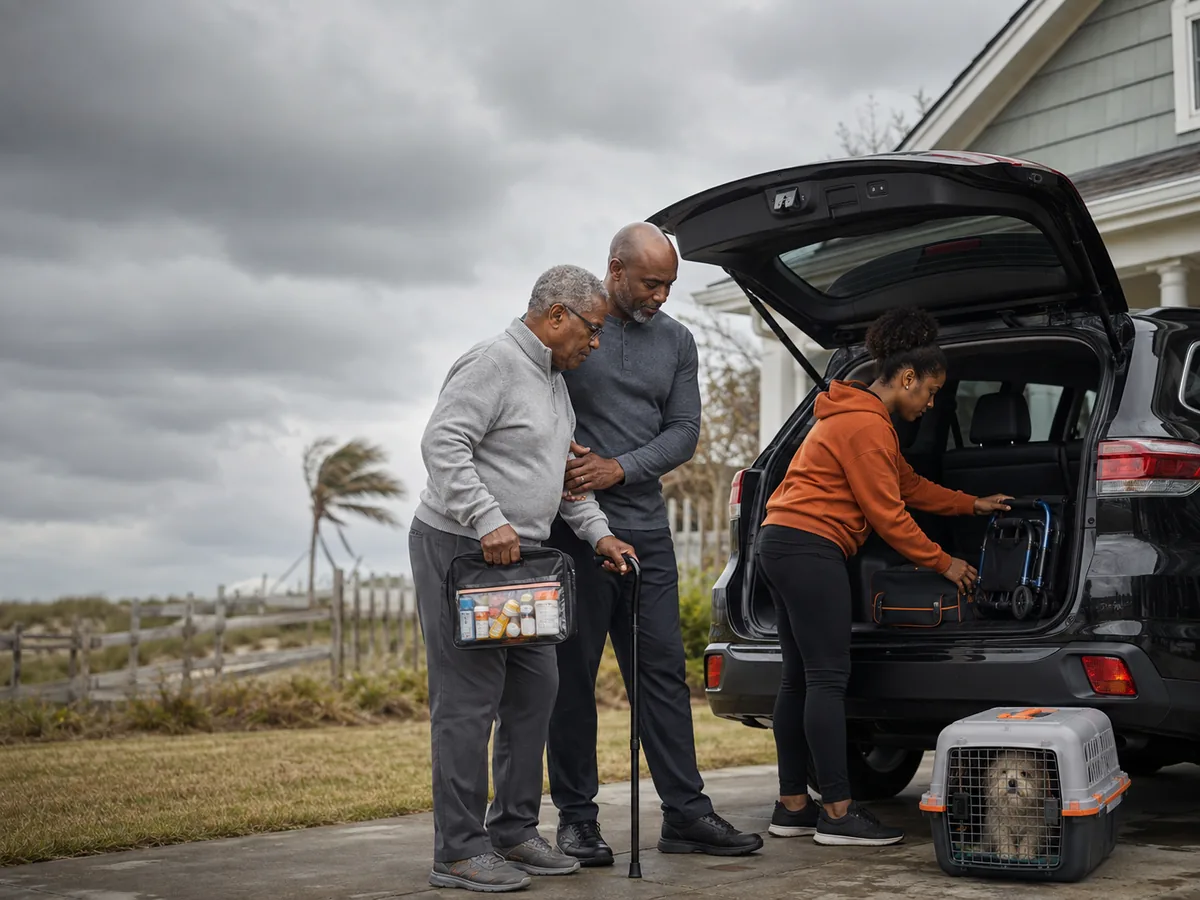
Hurricane evacuation is harder when the plan must also protect medication, mobility, powered medical equipment, memory needs, pets, and a person who cannot leave without help. The goal is not to move faster after an order arrives. It is to make the important decisions early enough that everyone can leave safely, follow official routes, and arrive with the support they need.

Written by Coach Dex
Practical guidance, checked against primary sources
Coach Dex is the founder and author behind SWC. Safety-sensitive guidance is checked against current government, public-safety, utility, or manufacturer information before publication.
Build the plan around the person, not a generic supply list
Start with the routines that keep the person safe on an ordinary day. Write down medication timing, mobility and transfer needs, communication preferences, allergies, dietary needs, service animals or pets, and any equipment that requires electricity, batteries, refrigeration, oxygen, or replacement supplies. This turns a broad evacuation checklist into a usable care plan.
Ready.gov recommends creating a support network and planning for daily living needs before an emergency. Choose at least two people who understand the plan. Give each person a clear role, such as transportation, medication, pet handling, or contacting the destination. Do not rely on one caregiver, one vehicle, or one phone.
- Create a one-page care summary with the person’s name, needs, medications, clinicians, pharmacy, equipment supplier, emergency contacts, and insurance information
- List the help needed for walking, transferring, toileting, eating, hearing, seeing, communicating, or remembering instructions
- Write the exact location of go-bags, medication, mobility aids, chargers, records, pet supplies, and vehicle keys
- Give a trusted backup person access instructions when appropriate
Know the evacuation zone and decide what will trigger an early departure
Know whether the home is in a hurricane evacuation zone, flood-prone area, storm-surge area, manufactured-home community, or another location where local officials may direct residents to leave. Save the local emergency-management website, alert service, evacuation map, and transportation-assistance number. A hurricane forecast cone is not an evacuation map; local officials issue instructions for specific areas and hazards.
Caregivers often need more time than the general public to load equipment, move safely, secure pets, and travel. National Weather Service guidance says to follow evacuation orders and leave as early as possible to avoid heavy traffic and hazardous weather. Choose household triggers that begin preparation before an order and require departure immediately when officials direct it.
- Review official alerts at set times instead of continuously scrolling social media
- Leave early if the person cannot safely tolerate traffic delays, elevator loss, heat, disrupted care, or declining backup power
- Do not wait for visible flooding or damaging wind to begin moving
- Never stay in an evacuation zone because a destination, pet plan, or transportation plan was left unresolved
Arrange accessible transportation before the storm threatens
Decide who will drive, which vehicle can fit the person and essential equipment, and who will help with transfers. If the household does not have suitable transportation, contact local emergency management, paratransit, transit agencies, health systems, community organizations, or other local services before a storm. Some jurisdictions maintain voluntary registries or transportation-assistance programs, but enrollment and services vary.
Practice loading the person, mobility aid, equipment, bags, and pets on a normal day. Confirm that the vehicle can carry everything without blocking the driver’s view or creating loose hazards. Keep the fuel tank charged or fueled according to the vehicle and local guidance, and identify a backup route and driver.
- Measure wheelchairs, walkers, oxygen equipment, carriers, and vehicle openings
- Keep transfer boards, ramps, cushions, gloves, and other routine aids together
- Carry a paper map and written destination address in case phone service is limited
- Ask what assistance is available well before an evacuation order is issued
Protect medication and medical information
CDC advises taking prescription medicine during a hurricane evacuation because pharmacies may be closed during and after the storm. Refill routine prescriptions as early as the law, insurer, prescriber, and pharmacy allow. Keep medication in its labeled container, and carry a current list that includes doses, timing, allergies, prescribers, pharmacy contacts, and special storage instructions.
Ask a pharmacist or clinician how each temperature-sensitive medicine should be transported and how long it can remain outside its recommended range. Do not place medication directly on ice unless product instructions say that is safe, and do not stop, replace, or change a dose because of storm conditions without professional guidance.
- Pack medication where it stays with the person, not in an unattended trunk or separate vehicle
- Bring identification, insurance cards, copies of prescriptions, and clinician and pharmacy numbers
- Add glasses, hearing-aid batteries, glucose supplies, continence supplies, feeding supplies, and other daily health items
- Write down when refrigerated medicine left controlled storage and follow product-specific instructions
Make a power plan for medical equipment
List every device that depends on household electricity or rechargeable batteries. Include the model, power requirement, battery runtime, charging method, supplier, and what to do if the device fails. Ask the manufacturer, equipment supplier, clinician, or home-health provider for device-specific emergency instructions rather than improvising a power connection.
Registering with a utility’s medical-needs program may provide notices or planning information where offered, but it does not guarantee uninterrupted or faster power restoration. A generator or battery station also does not make an unsafe home safe. If essential equipment cannot be supported through the evacuation and outage period, arrange an appropriate destination and leave before backup power runs low.
- Charge approved batteries and label every cable before hurricane conditions arrive
- Keep device manuals and supplier numbers with the one-page care summary
- Confirm whether the destination can support charging, oxygen, refrigeration, and required space
- Use generators only outdoors and exactly as directed; never use one in a home, garage, basement, shed, breezeway, or enclosed porch
Choose a destination that can actually support the household
Choose a primary destination and a backup outside the expected hazard area. This may be a trusted home, hotel, public shelter, medical shelter, or another location identified by local officials. Call before the storm to confirm accessibility, power, refrigeration, bathroom access, sleeping arrangements, caregiver access, transportation, and policies for pets and service animals.
Public shelters are a safety option, but services vary. Ready.gov notes that some shelters allow only service or support animals, while pet arrangements differ by location. Never assume a hotel, shelter, or transportation provider will accept a pet, supply medical equipment, provide personal care, or store medication. Verify the details and keep a backup.
- Save the destination name, address, phone number, check-in rules, and two routes on paper
- Confirm whether a caregiver or personal assistant may remain with the person
- Ask about accessible entrances, restrooms, beds, quiet space, refrigeration, outlets, and charging
- Identify a pet-friendly option and bring vaccination records, identification, carriers or leashes, food, water, medication, and cleanup supplies
Pack in layers so the essential items leave first
A caregiver evacuation load may include more than one backpack. Use a small keep-with-the-person bag for medication, identification, communication, and immediate health needs. Put mobility and medical equipment next. Add a vehicle tote for clothing, hygiene, food, water, bedding, and pet supplies. Label every bag with a name and contact number.
Keep the first layer light enough for the caregiver to manage while assisting another person. Do not bury medicine, transfer aids, incontinence supplies, communication cards, or charging cables beneath household extras. Photograph packed equipment and record serial numbers when useful for replacement or insurance.
- Person bag: medication, records, phone, charger, glasses, hearing aids, communication aids, water, snacks, and immediate care supplies
- Equipment layer: mobility device, transfer aids, batteries, power cables, manuals, and protective covers
- Household layer: clothing, hygiene, bedding, shelf-stable food, water, pet supplies, and comfort items
- Vehicle layer: emergency kit, paper maps, flashlight, basic tools, and weather-appropriate supplies
Use a calm final-departure routine
When an evacuation order is issued, leave immediately and use the routes officials recommend. CDC warns never to drive through flooded areas because moving water can sweep away or stall vehicles. Do not take an unfamiliar shortcut around traffic; roads may be blocked, flooded, or reserved for emergency operations.
If time and local instructions allow, secure the home and disconnect appliances. Turn off utilities only when officials or the utility instruct you and you know how to do it safely. The caregiver’s first job is moving people safely—not finishing every household task.
- Account for every person, pet, medication bag, mobility aid, and essential device before leaving
- Tell the out-of-area contact when you depart, the route you are using, and where you plan to arrive
- Follow official traffic, weather, bridge, and shelter updates
- Keep the person’s immediate-needs bag within reach throughout the trip
Return only when officials say it is safe
An evacuation does not end when the wind or rain stops. Roads, bridges, utilities, elevators, indoor temperatures, water systems, pharmacies, and home-care services may remain disrupted. Follow local reentry instructions and confirm that the home can safely support the person before returning.
After the household is stable, document what worked and what created delay. Restock medicine and care supplies, recharge batteries, update destination contacts, and change the loading order if an essential item was hard to reach. A short review turns one difficult evacuation into a stronger plan for the next emergency.
- Confirm power, water, elevator, accessibility, and care services before returning
- Avoid floodwater, downed lines, damaged structures, and blocked roads
- Contact a pharmacist or clinician about medication exposed to unsafe conditions
- Update the one-page care summary after any change in health, equipment, housing, or support people
Common questions
Hurricane Evacuation FAQ
When should an older adult evacuate for a hurricane?
Follow local evacuation orders immediately. Because transportation, transfers, equipment, pets, and medical needs take time, caregivers should prepare and may need to leave earlier than other households. Use official local guidance and leave before traffic, weather, elevator loss, heat, or declining backup power makes travel unsafe.
What medication should a caregiver take during a hurricane evacuation?
Take all current prescription and essential over-the-counter medication, preferably in labeled containers, plus a current medication list, allergies, prescriber and pharmacy contacts, identification, insurance information, and product-specific storage supplies. Refill early when permitted and ask a pharmacist about temperature-sensitive medicine.
What should go in an evacuation bag for an older adult?
Prioritize medication, health records, identification, phone and chargers, glasses, hearing aids and batteries, communication aids, water, snacks, hygiene and continence supplies, clothing, mobility and transfer aids, and instructions for powered equipment. Keep immediate health needs with the person during travel.
Can a hurricane shelter support powered medical equipment?
Support varies by shelter. Contact local emergency management before the storm to ask about electricity, charging, refrigeration, oxygen, accessibility, personal-care assistance, space for equipment, and medical-shelter eligibility. Keep a backup destination because a standard public shelter may not provide every service.
Will a utility medical-needs registry guarantee power restoration?
No. A utility program may provide planning information or notifications where available, but it does not guarantee uninterrupted power or priority restoration. Build a separate backup-power and relocation plan using instructions from the medical-device manufacturer, supplier, and health-care team.
Can pets go to a hurricane evacuation shelter?
Pet policies vary. Service animals have different protections from pets, and some shelters or transport services may have separate arrangements. Confirm the local policy before the storm and identify a pet-friendly backup destination. Bring identification, records, carriers or leashes, food, water, medication, and cleanup supplies.
Should a caregiver drive around hurricane evacuation traffic?
Use the routes recommended by emergency officials, even when traffic is heavy. Do not use an unfamiliar shortcut or drive through floodwater. Roads may be blocked, flooded, damaged, or reserved for emergency operations. Check official traffic and weather updates before and during travel.
Do this today
Your next three steps
- 1Write one early-departure trigger and choose two accessible destinations
- 2Create a one-page care summary and place a copy with medication and equipment
- 3Practice loading the person, mobility aid, essential equipment, pet, and bags into the vehicle
SWC provides general education. During an active emergency, follow local officials and the appropriate authorities.