
Hurricane Preparedness
Last-Minute Hurricane Preparation Checklist: 72, 48, and 24 Hours Before a Storm
Use this calm last-minute hurricane checklist to prioritize alerts, evacuation, medication, pets, food, power, and final household actions.
Save to Pinterest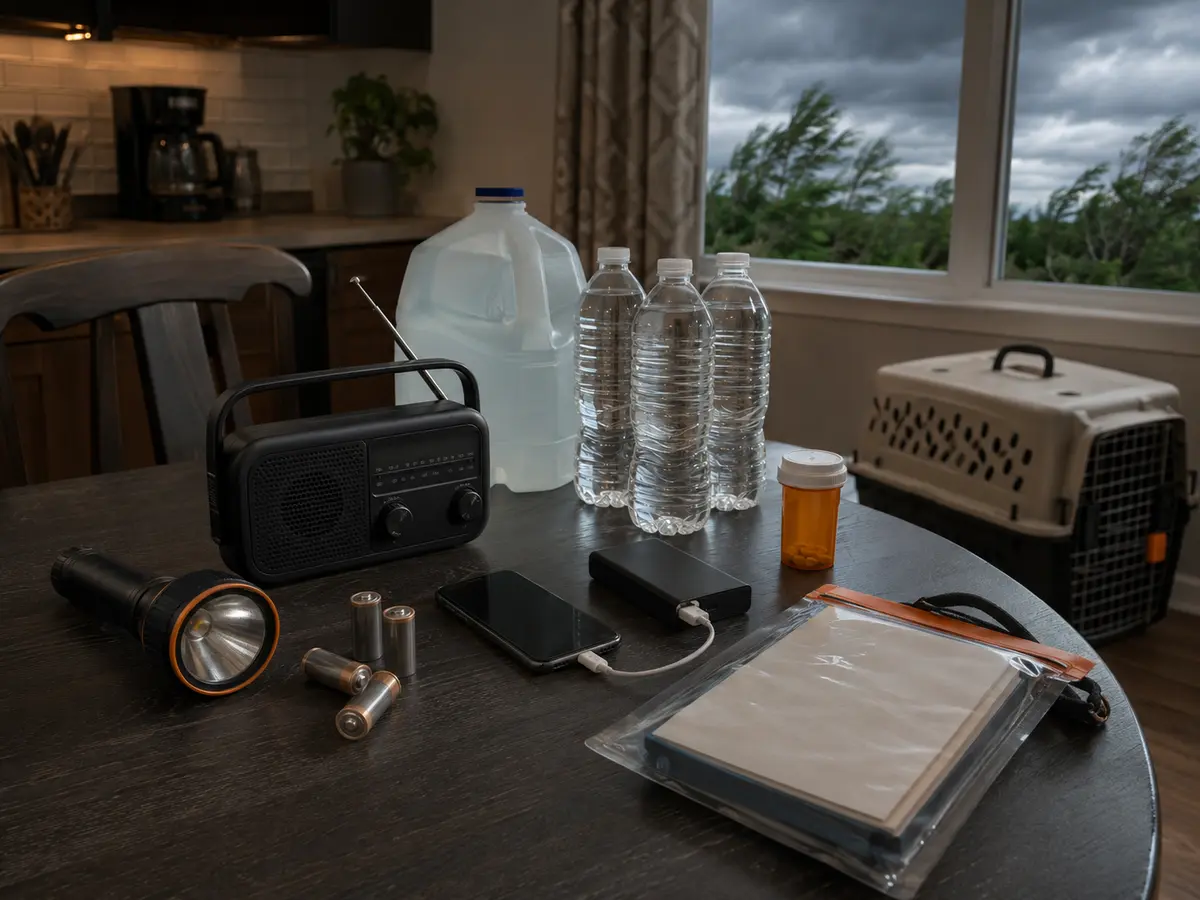
When a hurricane may affect your area, a short timeline can keep the household focused—but it is not permission to wait. Watches, warnings, storm speed, local hazards, and evacuation instructions can change. Start now, follow the National Hurricane Center, your local National Weather Service office, and local emergency management, and leave immediately if officials tell your zone to evacuate.

Written by Coach Dex
Practical guidance, checked against primary sources
Coach Dex is the founder and author behind SWC. Safety-sensitive guidance is checked against current government, public-safety, utility, or manufacturer information before publication.
First: use official information and choose your leave-or-stay trigger
Check whether the home is in an evacuation, storm-surge, flood, or manufactured-home risk area. Save the local emergency-management page and alerts, then write down the household's evacuation destination, route, transportation, and the instruction that means it is time to leave. The Saffir-Simpson category measures wind only; it does not describe storm surge, rainfall flooding, tornadoes, or every local hazard.
National Weather Service guidance says a hurricane watch is generally issued about 48 hours before tropical-storm-force winds are possible, while a hurricane warning is generally issued about 36 hours before they are expected. Preparations become harder and travel can become unsafe before the center of the storm arrives, so local instructions—not this countdown—control your timing.
- Turn on Wireless Emergency Alerts and sign up for local emergency notifications
- Save the National Hurricane Center, local weather office, emergency management, utility, and transportation contacts
- Write one destination outside the risk area and one backup destination
- Identify who needs extra departure time because of mobility, medical equipment, children, pets, or transportation
About 72 hours out: solve the decisions that cannot be rushed
Use the earliest window to handle transportation, medication, accessibility, work schedules, pet arrangements, and anything that depends on an open business. Refill prescriptions as early as the prescriber, pharmacy, insurer, and law allow. Ask the pharmacist how temperature-sensitive medicine should be transported; do not place it directly on ice or change how you use it unless product-specific guidance says to do so.
Fuel the vehicle or charge it, verify the evacuation route, and practice loading mobility aids, medical equipment, carriers, and essential bags. If the household may need accessible transportation or a medical shelter, contact local emergency management before conditions deteriorate because availability and registration rules vary.
- Bring outdoor furniture, grills, tools, toys, and loose objects inside when it is safe
- Photograph the home and important property for records, then protect copies of identification, insurance, prescriptions, and contacts
- Confirm a pet-friendly destination and pack carriers or leashes, identification, records, food, water, medication, and cleanup supplies
- Charge mobility equipment and approved backup batteries; label each cable and keep device instructions nearby
- Choose one out-of-area contact who can help the household reconnect
About 48 hours out: build the outage and communication layer
Charge phones, power banks, rechargeable lights, weather radios, and approved medical-device batteries. Test flashlights and carbon-monoxide alarms. Put a paper contact list, local map, insurance information, and copies of key documents in a waterproof pouch. Download maps and essential information for offline use.
Build the kit around what your household actually uses: water, shelf-stable food, a manual can opener, medication, hygiene items, pet supplies, baby supplies, mobility needs, cash, and weather-appropriate clothing. Ready.gov recommends supplies for several days; local emergency management may recommend a longer period for hurricane recovery.
- Freeze water containers or cold packs while leaving room for expansion
- Place appliance thermometers in the refrigerator and freezer if available
- Move frequently needed items where they will be reachable without elevators or household power
- Set a family check-in time and a backup method such as text messages or the out-of-area contact
- Keep evacuation bags by the exit without blocking the path
About 24 hours out: finish only what can still be done safely
Recheck official forecasts, warnings, evacuation orders, shelter information, road conditions, and transit updates. Put phones, chargers, medication, keys, wallets, shoes, rain gear, pet gear, mobility aids, and the document pouch together. Tell the out-of-area contact where the household plans to go and when it expects to leave.
Keep refrigerator and freezer doors closed as much as possible. CDC says an unopened refrigerator keeps food safe for about four hours after power loss, a full freezer for about 48 hours, and a half-full freezer for about 24 hours. These are food-safety limits after the outage begins—not reasons to remain in an unsafe home.
- Fill clean water containers and follow any local drinking-water instructions
- Move vehicles to a safer location only while roads and conditions remain safe
- Review how to shut off utilities, but do so only when instructed by officials or the utility and you can do it safely
- Keep cash in small bills and keep identification and essential health information with each person
- Stop outdoor preparation when wind, lightning, flooding, or official instructions make it unsafe
If your area is ordered to evacuate
Leave immediately using routes recommended by local officials. Do not wait for the weather to look dangerous, and do not take an unfamiliar shortcut around traffic. Roads may flood, close, or be reserved for emergency operations. Never drive through floodwater; turn around and choose another route.
Take people, pets, medication, mobility and medical equipment, identification, emergency bags, chargers, and the written destination information. Household protection tasks are secondary to leaving safely. Tell the out-of-area contact when you depart and when you arrive.
- Account for every person and pet before the vehicle moves
- Keep medication and immediate care supplies with the person, not in a separate vehicle
- Continue following official weather, traffic, shelter, and reentry information
- Return only after local officials say it is safe
If officials have not ordered evacuation and sheltering is appropriate
Use the safest location identified in the household plan: generally a small interior room, closet, or hallway away from windows, skylights, and glass doors. Keep alerts, shoes, flashlights, medication, water, a fire extinguisher, and the go-bag within reach. Do not go outside during the calm of the eye; damaging winds can return rapidly from the opposite direction.
If using a portable generator after the storm, CDC says it must remain outdoors at least 20 feet from any door, window, or vent. Never run one in a home, garage, basement, carport, porch, or other enclosed or partly enclosed place—even with doors open. Use a working battery-powered or battery-backup carbon-monoxide detector.
- Stay away from windows and use the interior safe location when officials advise it
- Use flashlights instead of candles when possible to reduce fire risk
- Never use a grill, camp stove, charcoal, or vehicle engine inside or in an enclosed area
- Move to an appropriate public shelter or safer location if heat, cold, medical needs, or loss of safe power makes the home unsafe
Use a household-specific final check
A generic checklist is only the starting point. Walk through an ordinary day for each person and pet, then pack what keeps that routine safe. For older adults, disabled people, caregivers, and anyone using powered medical equipment, the destination must support the actual accessibility, charging, refrigeration, oxygen, communication, and personal-care needs—not simply provide a roof.
- Medication: labeled containers, current list, prescriber and pharmacy contacts, storage instructions, cooler only when directed
- Mobility: wheelchair, walker, cane, transfer aids, cushions, repair kit, chargers, approved batteries, and loading help
- Children: identification, comfort item, feeding supplies, diapers, medication, and a simple explanation of the plan
- Pets: carrier or leash, identification, vaccination records, food, water, medicine, waste supplies, and confirmed destination
- Communication: phones, hearing-aid batteries, communication board or device, paper contacts, and one out-of-area contact
Skip these dangerous last-minute mistakes
Last-minute preparation should reduce risk, not create a new one. Do not climb, cut limbs, board windows, move heavy objects, or travel once conditions make the work unsafe. Do not rely on social-media rumors, a single weather model, or the hurricane category alone. Use official local instructions and verified forecasts.
- Do not delay an evacuation order to finish packing or protect property
- Do not drive around barricades or through water-covered roads
- Do not use a generator, grill, or camp stove indoors, in a garage, or near openings
- Do not taste refrigerated food to decide whether it is safe after an extended outage
- Do not improvise medication storage, oxygen handling, or medical-device power connections
Common questions
Hurricane Preparedness FAQ
How late is too late to prepare for a hurricane?
There is no universal safe cutoff. Preparation and travel become harder before the storm center arrives, especially when tropical-storm-force winds, flooding, traffic, or evacuation orders begin. Start immediately, stop outdoor work when conditions become unsafe, and leave at once if local officials order your zone to evacuate.
Should I evacuate for a Category 1 hurricane?
Follow local evacuation orders and hazard information, not the category alone. The Saffir-Simpson category measures maximum sustained wind only; it does not describe storm surge, rainfall flooding, tornadoes, or every local risk. Homes in evacuation zones, flood-prone areas, or unsafe structures may need to evacuate even for a lower-category storm.
How much emergency water should I have before a hurricane?
Ready.gov recommends storing at least one gallon per person per day for several days for drinking and sanitation, and more may be needed for children, nursing people, sick people, pets, or hot conditions. Follow local emergency-management guidance because hurricane recovery can last longer in some areas.
What should I do with refrigerated medication before a hurricane?
Contact the pharmacist, prescriber, or manufacturer for product-specific transport and storage instructions. Keep medicine in labeled containers, record when it leaves controlled storage, and do not place it directly on ice, freeze it, change the dose, or discard it unless qualified guidance says to do so.
Can I run a generator in the garage with the door open?
No. CDC says never to run a portable generator in a home, basement, garage, carport, porch, or other enclosed or partly enclosed space, even with doors or windows open. Place it outdoors at least 20 feet from doors, windows, and vents and use a working carbon-monoxide detector.
What food should I buy at the last minute for a hurricane?
Choose shelf-stable foods your household already eats, require little water or cooking, fit allergies and medical diets, and can be opened with the tools you have. Include a manual can opener. Avoid overspending on unfamiliar food, and never use an outdoor grill or camp stove indoors if power is lost.
Do this today
Your next three steps
- 1Turn on official alerts and write the instruction that means your household will leave
- 2Stage medication, documents, chargers, pet supplies, and mobility or medical equipment by the exit
- 3Share the destination, route, and check-in plan with one out-of-area contact
SWC provides general education. During an active emergency, follow local officials and the appropriate authorities.