
Extreme Heat
Power Outage During Extreme Heat: How to Stay Cool and Know When to Leave
Learn how to stay cool during a summer power outage, protect pets and medication, spot heat illness, and know when to leave for cooling.
Save to Pinterest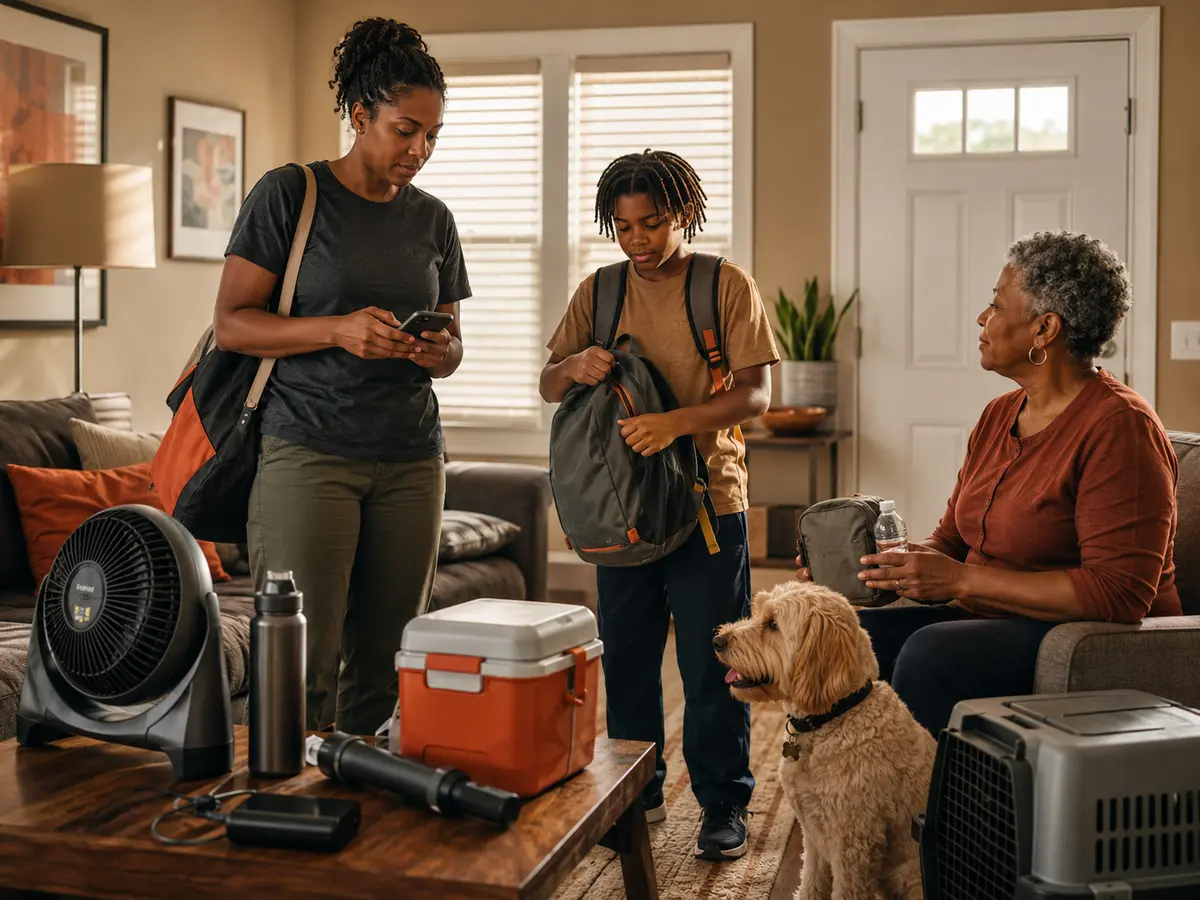
A power outage during extreme heat is more than an inconvenience. Air conditioning, elevators, refrigeration, charging, and powered medical equipment can stop at the same time the indoor temperature begins to rise. The safest plan is not to prove that you can tolerate the heat. It is to cool people first, watch for heat illness, and move to an air-conditioned location before travel becomes difficult.

Written by Coach Dex
Practical guidance, checked against primary sources
Coach Dex is the founder and author behind SWC. Safety-sensitive guidance is checked against current government, public-safety, utility, or manufacturer information before publication.
Treat a hot-weather outage as a health problem, not a comfort problem
Heat can affect anyone, but the risk is higher for infants, older adults, pregnant people, outdoor workers, people with chronic medical conditions, and people who take certain medications. Limited mobility, living alone, and dependence on electricity-powered medical equipment can make a long outage harder to manage.
Check the National Weather Service forecast, local HeatRisk information, air quality, utility updates, and messages from local emergency management. The outdoor temperature is only part of the decision. Humidity, direct sun, poor nighttime cooling, smoke, the temperature inside your home, and each person's health needs all matter.
- Name one person who will check on each household member who may need help
- Keep a simple list of symptoms, medications, mobility needs, and powered equipment
- Save the utility outage number and local cooling-center information before the forecast worsens
- Use a room thermometer if you have one, but do not wait for a single number before responding to symptoms
Make the cooling-location plan before the power fails
CDC guidance recommends spending time in air-conditioned places when home air conditioning is unavailable. Identify at least two realistic options: a cooling center, library, community center, mall, trusted home, hotel, or another location that local officials say is open. Confirm hours, accessibility, pet rules, and transportation instead of assuming a location will be available.
Decide what would make your household leave. Examples include an outage estimate that extends into the hottest hours, a home that is no longer cooling overnight, a person developing symptoms, a medical device losing backup power, or transportation becoming uncertain. Leaving while everyone is stable is usually easier than moving after someone becomes ill.
- Choose a primary and backup air-conditioned destination
- Plan an accessible ride and a backup driver or transportation option
- Pack identification, medication, chargers, water, mobility aids, pet supplies, and a small comfort item
- Tell an out-of-area contact where you plan to go
- Check whether 211 or your local health department lists cooling locations in your area
What to do in the first minutes of a summer power outage
Report the outage through the utility's official channel and check the estimated restoration time. Preserve phone power by lowering screen brightness, using low-power mode, and limiting nonessential streaming. Follow official alerts rather than relying on unverified neighborhood posts.
Reduce new heat inside the home. Close blinds or curtains on sun-facing windows, limit use of the stove and oven, and move people to the coolest available area. If outdoor air becomes cooler than indoor air, safe cross-ventilation may help. Keep doors and windows closed when outdoor air is hotter, smoky, or unsafe.
- Bring household members and pets together so changes are easier to notice
- Use cool showers, baths, or cool wet cloths when safe and practical
- Wear loose, lightweight clothing and reduce strenuous activity
- Drink water regularly; do not wait until you feel thirsty
- Keep refrigerator and freezer doors closed until you have a food or medication plan
A battery fan is useful, but it is not the whole heat plan
A fan can provide comfort and help with cooling in some conditions, especially with damp skin or a cool cloth. CDC warns not to rely on fans alone when temperatures are very hot because moving hot air may not prevent heat-related illness. The National Weather Service also notes that a fan can make a person hotter at high heat-index levels.
Treat a fan as one layer, not permission to stay in a dangerous room. If the home remains hot, the heat alert is severe, a vulnerable person is present, or anyone develops symptoms, move to an air-conditioned place. Even a few hours in cooling can reduce heat risk.
- Test battery and rechargeable fans before heat arrives
- Charge power banks while utility power is available
- Do not aim a fan at someone with suspected heat stroke as a substitute for emergency care
- Never run a vehicle, grill, camp stove, or generator indoors to power cooling equipment
Know the difference between heat exhaustion and heat stroke
Heat exhaustion can include heavy sweating, weakness or tiredness, cool or clammy skin, a fast weak pulse, cramps, dizziness, headache, nausea, vomiting, or fainting. Move the person to a cooler place, loosen clothing, apply cool wet cloths or use a cool bath, and offer small sips of water if the person is alert and not vomiting. Seek medical care immediately if symptoms worsen, vomiting occurs, or symptoms last longer than one hour.
Heat stroke is a medical emergency. Warning signs can include confusion, slurred speech, loss of consciousness, a rapid strong pulse, very hot skin, or a body temperature above 103°F. Call 911 immediately, move the person to a cooler place, and cool with wet cloths or a cool bath while help is coming. Do not give fluids to a person with suspected heat stroke.
- Do not leave a symptomatic person alone
- When in doubt, contact emergency medical services
- Do not use fever-reducing medicine as a treatment for heat stroke
- Write the warning signs on a paper card in case phone service or charging is limited
Protect medication, medical equipment, and mobility
Do not stop or change medication because of hot weather unless a health professional tells you to. CDC advises making a power-outage plan for refrigerated medications and electricity-powered medical devices. Ask the pharmacist, clinician, manufacturer, or equipment supplier how the specific product should be stored and what backup options are appropriate.
A cooler can help only when it keeps a medicine within the product's required temperature range. Do not place medicine directly on ice unless the instructions say that is safe, because freezing can damage some products. Note when the outage began and limit refrigerator opening. If you are unsure whether a medicine is safe after heat exposure, contact a pharmacist or manufacturer rather than guessing.
- Keep a written medication and device list in the go-bag
- Plan backup power according to the device manufacturer's instructions
- Notify the utility and local responders about life-sustaining equipment when local programs allow
- Choose a destination that can accommodate mobility aids, service animals, refrigeration, and charging
- Leave before elevator loss or transportation delays make movement unsafe
Include babies, older adults, pets, and people who live alone
Infants and young children cannot regulate temperature as effectively as adults. Older adults may be less likely to sense heat or thirst and may have health conditions or medications that raise risk. Set scheduled check-ins instead of waiting for someone to ask for help, and make sure a trusted person can enter the home if needed.
Bring pets inside early, provide cool water, reduce activity, and plan a pet-friendly cooling destination. Never leave a child, disabled person, older adult, or pet in a parked vehicle, even with the windows cracked. If you transport pets, use secure carriers or leashes and bring medication, identification, food, water, and cleanup supplies.
- Use a buddy system for anyone who lives alone
- Schedule check-ins during the hottest part of the day and overnight
- Keep carriers, leashes, mobility aids, and essential bags by the exit
- Ask cooling locations about pet and service-animal policies before leaving
Use generators and backup power without creating a second emergency
Portable generators produce deadly carbon monoxide. Operate generators only outdoors, far from doors, windows, and vents, and follow the manufacturer's directions. Never use a generator in a home, garage, basement, shed, breezeway, or enclosed porch. Make sure working carbon monoxide alarms are installed in appropriate locations.
Use only equipment rated for the intended load and environment. Do not connect a portable generator directly to household wiring unless a qualified electrician has installed an approved transfer system. If you use a battery power station, follow its charging, temperature, ventilation, and load limits. Backup power may support communication or a small device, but it should not replace the plan to relocate when safe cooling is unavailable.
- Test carbon monoxide alarms before storm and heat seasons
- Keep fuel outside living areas in approved containers and follow local rules
- Use heavy-duty outdoor-rated cords exactly as directed
- Never improvise connections or exceed equipment limits
After power returns, reset the household safely
Power restoration does not automatically make every food, medicine, or device safe. Check appliance thermometers and follow current CDC or FDA guidance. An unopened refrigerator generally keeps food cold for about four hours, while a full freezer may hold temperature for about 48 hours and a half-full freezer for about 24 hours. When in doubt about perishable food, discard it.
Reconnect sensitive equipment according to the manufacturer, recharge batteries, replace used water, and document what failed. Update the plan with the actual cooling location, travel time, indoor conditions, pet needs, medication questions, and backup-power limits you discovered.
- Record the outage start and restoration times
- Check food and medication using official and product-specific guidance
- Recharge every light, fan, phone, and power bank
- Restock the cooling go-bag before the next hot day
Common questions
Extreme Heat FAQ
How can I stay cool during a power outage in extreme heat?
Close blinds against direct sun, reduce cooking and activity, use cool showers or wet cloths, wear loose clothing, drink water, and move to the coolest available area. A fan may help with comfort, but CDC says not to rely on fans alone when temperatures are very hot. Plan to spend time in an air-conditioned cooling center or other safe location.
When should I leave home during a heat-related power outage?
Leave early when the home cannot stay cool, the outage may continue through the hottest hours, transportation or elevators may become unreliable, backup power for essential equipment is running low, or anyone develops heat-illness symptoms. Follow evacuation or cooling instructions from local officials.
Is a battery fan enough during an extreme-heat outage?
No. A battery fan can improve comfort in some conditions, but CDC warns that fans alone do not prevent heat-related illness when temperatures are very hot. Use it as one layer while you monitor conditions and move to air conditioning when needed.
What are the warning signs of heat stroke?
Warning signs can include confusion, slurred speech, fainting or loss of consciousness, a rapid strong pulse, very hot skin, or a body temperature above 103°F. Heat stroke is a medical emergency. Call 911, move the person to a cooler place, and cool with wet cloths or a cool bath. Do not give fluids to someone with suspected heat stroke.
What should I do with refrigerated medication during a power outage?
Keep the refrigerator closed, note when the outage began, and follow the medicine label and product-specific instructions. Do not stop or change medication without professional advice. Contact a pharmacist, clinician, manufacturer, or equipment supplier if you are unsure about storage, temperature exposure, or replacement.
Where can I find a cooling center during a power outage?
Check your local emergency-management agency, health department, municipal website, 211 service, or official alerts. Confirm that the location is open and ask about hours, accessibility, transportation, pets, service animals, medication refrigeration, and charging before traveling.
How do I keep pets safe when the air conditioning is off?
Bring pets inside, provide cool water, reduce activity, watch for distress, and move them to a pet-friendly air-conditioned location when the home becomes too hot. Use secure carriers or leashes and never leave a pet in a parked vehicle.
Do this today
Your next three steps
- 1Save two air-conditioned places and confirm how you would get there
- 2Write one leave-early trigger for every person, pet, medication, and powered device in the household
- 3Pack a small heat-outage bag with water, medication, chargers, identification, pet supplies, and mobility essentials
SWC provides general education. During an active emergency, follow local officials and the appropriate authorities.