
Severe Weather
Turn Weather Alerts Into a Household Plan
Know what alerts mean, where to get official information, and what your family will do next.
Save to Pinterest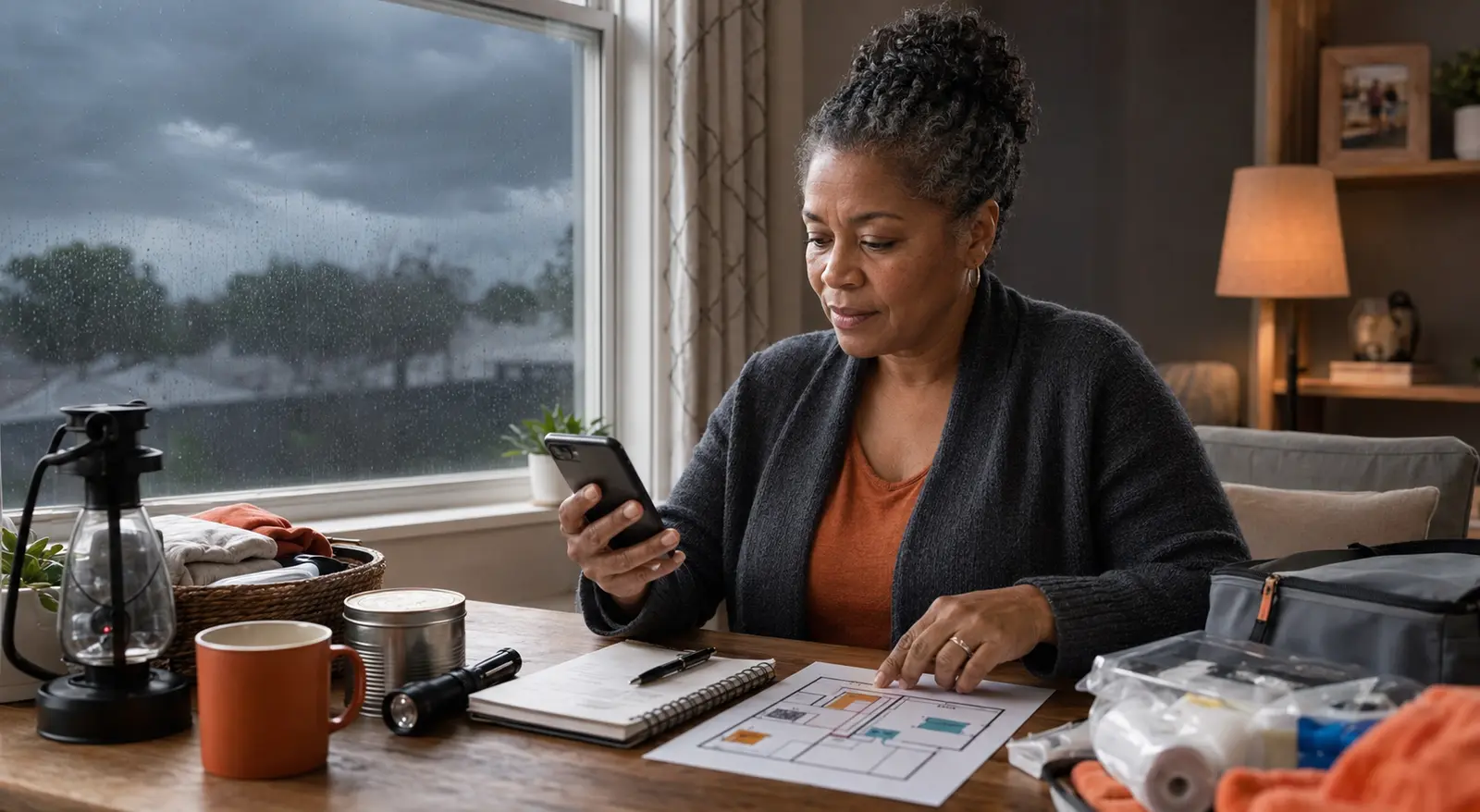
An alert is only useful when it triggers a specific household action. Decide which official sources you trust, where you will shelter, and what changes when a watch becomes a warning.

Written by Coach Dex
Practical guidance, checked against primary sources
Coach Dex is the founder and author behind SWC. Safety-sensitive guidance is checked against current government, public-safety, utility, or manufacturer information before publication.
Use more than one alert source
Enable Wireless Emergency Alerts, follow your local emergency management agency, and use a weather radio or trusted weather app. Do not depend on a single social platform.
- Confirm alerts are enabled on every phone
- Bookmark local emergency management
- Know your National Weather Service office
Match the alert to an action
A watch means conditions are possible and it is time to review the plan. A warning means hazardous weather is occurring or imminent and you should take protective action.
- Watch: charge devices and review shelter
- Warning: move to the designated safe place
- Evacuation order: follow official routes and timing
Choose the safest available location
For high winds and tornadoes, use a small interior room on the lowest level away from windows. Flood and hurricane plans may require evacuation instead of sheltering at home.
- Keep shoes, light, and helmets nearby
- Include medication and pet supplies
- Never drive through floodwater
Do this today
Your next three steps
- 1Enable alerts on your phone
- 2Identify your safest room
- 3Follow your local emergency management agency
SWC provides general education. During an active emergency, follow local officials and the appropriate authorities.